Elevation's Quiet Role in Reshaping Expectations for Soccer Results and Thoroughbred Speeds During Multi-Bet Builds
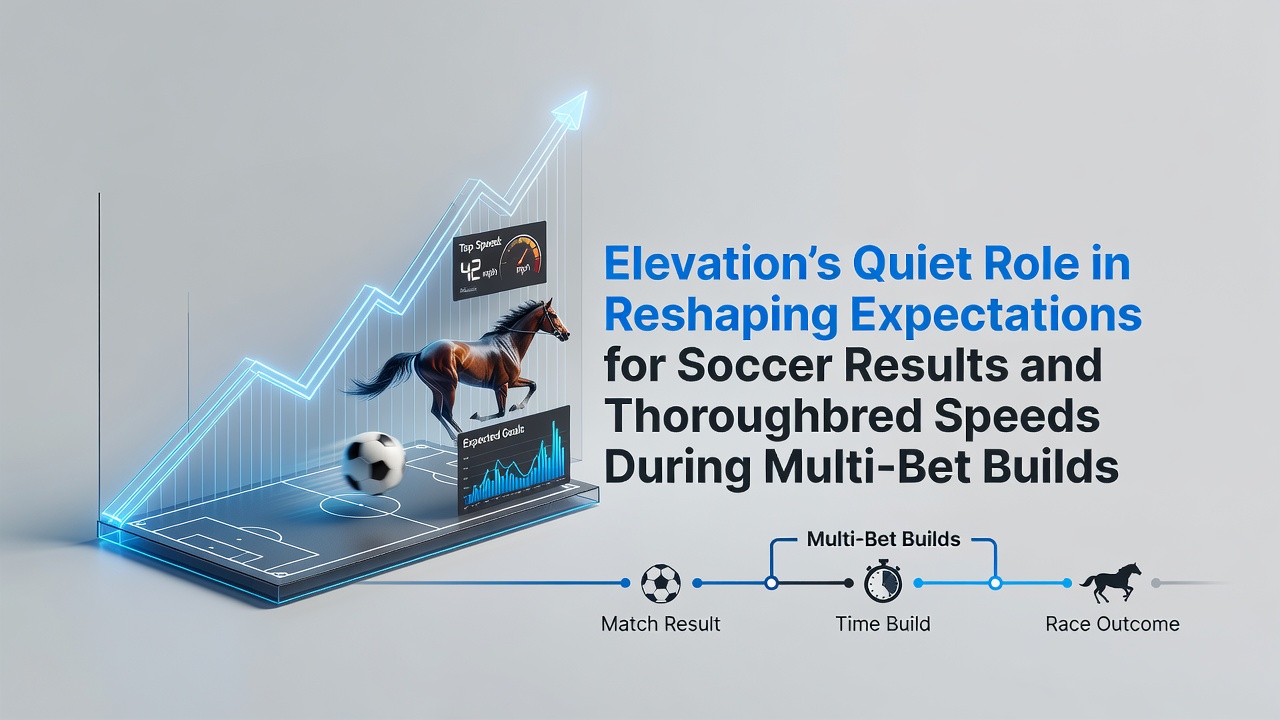
High elevation venues alter oxygen availability in ways that shift physical outputs for athletes and animals alike, and data from multiple sports governing bodies shows consistent patterns in reduced endurance and altered pacing strategies. Observers note that soccer matches played above 2,000 meters often feature fewer total passes completed in the final 30 minutes compared with sea-level fixtures, while thoroughbreds competing at similar heights record slower sectional times in the closing stages of races. These adjustments matter for anyone constructing multi-bet builds because expected goal tallies and finishing speeds require recalibration when elevation enters the equation.
How Altitude Changes Oxygen Delivery in Team Sports
Researchers at institutions across South America and North America have documented that partial pressure of oxygen drops roughly 20 percent at 2,500 meters, forcing compensatory increases in heart rate and breathing frequency. In soccer this manifests as earlier onset of fatigue among players unaccustomed to the conditions, with visiting squads from lower-lying regions covering less high-intensity distance after the 60-minute mark. Figures from CONMEBOL competitions reveal that home teams in Bolivian and Ecuadorian venues maintain possession percentages closer to 55 percent in the second half, whereas the same clubs drop below 48 percent when playing at neutral or low-altitude sites. Bettors tracking accumulator legs therefore adjust line expectations downward for total goals when one or both sides travel from significantly different elevations.
Thoroughbred Performance at Elevation
Horse racing records from tracks situated between 1,500 and 2,200 meters indicate that average winning times lengthen by 1.8 to 3.2 seconds per mile relative to comparable surfaces at sea level, according to analyses published by racing authorities in the United States and Australia. The effect appears most pronounced in races longer than 1,400 meters where aerobic demand rises steadily. Jockeys and trainers report that horses with proven records at altitude maintain stride efficiency better than newcomers, producing speed figures that remain stable across multiple starts at those venues. Multi-bet builders incorporate these historical speed adjustments when evaluating late-race contenders, particularly in handicaps where weight allowances interact with environmental factors.
Case Examples from 2025-2026 Seasons
During the 2025 Copa Libertadores group stage, matches hosted at stadiums exceeding 2,800 meters produced an average of 2.1 goals per game, down from 2.7 in fixtures below 500 meters, according to tournament statistical summaries. One notable series featured a coastal club that averaged 1.4 expected goals per match at home yet managed only 0.9 expected goals across two away legs at elevation. In North American thoroughbred racing, the 2026 spring meet at a Colorado track recorded median winning times 2.4 seconds slower than the same distances contested at Kentucky venues earlier that month. Handicappers who updated their models with elevation-specific pace projections captured value in exacta and trifecta pools that standard sea-level figures overlooked.

Integrating Elevation Data into Accumulator Construction
Statistical services that aggregate player tracking and equine biometric data now supply elevation-adjusted metrics alongside traditional form indicators. When building football accumulators, analysts compare each team's historical output at different altitudes rather than relying solely on overall season averages. A side that posts strong expected goal numbers at home may still see those figures decline 15 to 25 percent when traveling upward more than 1,500 meters. Similar logic applies to racing doubles where speed ratings receive an altitude modifier derived from past performances at the host track. Those modifiers, when applied consistently, narrow the variance between projected and actual finishing positions.
Regulatory and Research Perspectives
Studies funded by the Australian Institute of Sport and the Canadian Centre for Ethics in Sport have examined recovery timelines following exposure to reduced oxygen environments, finding that full restoration of sea-level performance capacity requires between 48 and 72 hours for most athletes. Racing commissions in multiple jurisdictions require trainers to declare prior altitude exposure for horses entered in stakes races, allowing handicappers access to contextual information that influences morning-line odds. These reporting requirements create transparent datasets that accumulator platforms can reference when weighting individual legs.
Conclusion
Elevation continues to function as a quiet variable that modifies baseline expectations for both soccer scoring and thoroughbred finishing speeds. Data from governing bodies and academic researchers demonstrates measurable impacts that accumulate across multi-leg bets when left unadjusted. Observers who incorporate venue-specific altitude corrections into their models align projected outcomes more closely with observed results across both sports.