Performance Dips After International Breaks in Soccer Leagues and Post-Layoff Stretches in Thoroughbred Calendars Shape Betting Lines Across Bookmakers
 Observers note that international breaks in soccer often lead to measurable performance variations among club sides once domestic action resumes, while similar patterns appear in thoroughbred racing when horses return after extended layoffs. These shifts influence how bookmakers adjust lines across multiple markets, from match result probabilities to outright race outcomes. Data from the 2025-2026 European season shows that teams with four or more players on international duty tend to collect fewer points in their first match back compared to their season averages. European competitions running through May 2026 highlight this trend, especially during the final international window before the summer recess. Analysts track these returns closely because fatigue and disrupted training schedules create predictable dips that betting operators incorporate into pre-match pricing.
Soccer Leagues and the International Break Effect
Leagues across England, Spain, and Germany release fixture lists that intersperse club games with FIFA and UEFA windows, and researchers have quantified the subsequent performance changes. Studies conducted by academic groups in Germany found that squads missing key personnel for ten days or longer show elevated rates of goals conceded in the opening forty-five minutes upon return. Bookmakers respond by widening margins on underdog selections or adjusting over-under totals when multiple high-travel nations release players back to domestic clubs simultaneously.
Take the case of a Premier League side that sent eight players to various national teams in March 2026. Upon resumption, its expected goals differential dropped noticeably in the next two fixtures, a pattern repeated across several tracked campaigns. Operators at major platforms therefore shade their lines slightly toward the opposition in those early post-break encounters, creating opportunities for bettors who monitor squad travel logs and recovery timelines.
Thoroughbred Layoffs and Calendar Gaps
In horse racing, post-layoff stretches produce comparable adjustments in betting markets. Thoroughbred calendars feature planned breaks for rest, injury recovery, or seasonal transitions, and data compiled by North American racing authorities indicates that horses returning after thirty or more days off win at lower percentages in their first start back. Trainers often ease such runners into competition, which handicappers and oddsmakers factor into morning-line calculations and live odds boards.
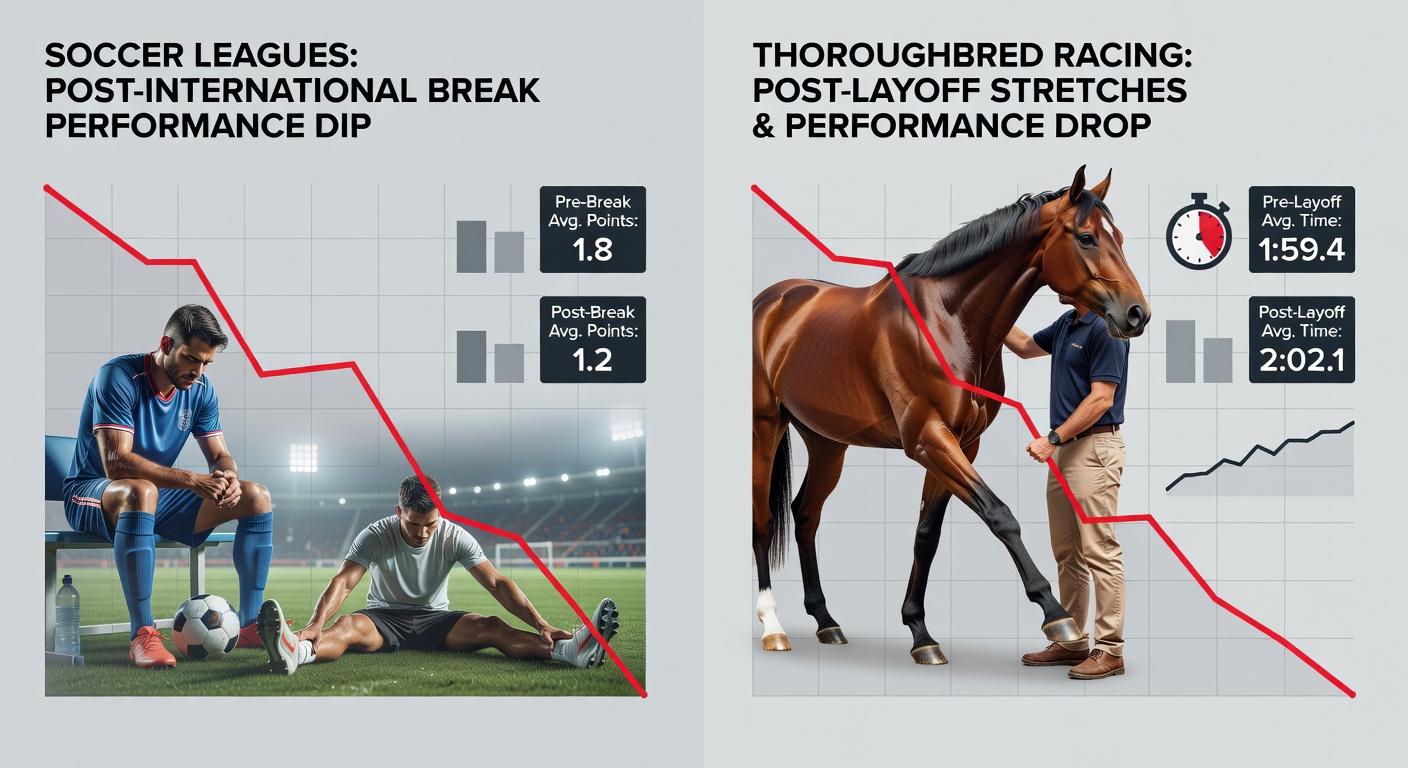
Australian racing reports from the same period show that sprinters coming off eight-week gaps record slower sectional times in their initial outings, prompting bookmakers to lengthen place odds and exacta payouts accordingly. These adjustments ripple through multi-leg wagers where a single rested runner can alter the overall payout structure of an accumulator.
Bookmaker Adjustments and Market Reactions
Betting operators integrate performance data from both sports into proprietary models that recalibrate lines hours before events begin. When soccer squads face short recovery windows after international commitments, lines on clean-sheet markets move toward the over, while horse racing books respond to layoff statistics by inflating win prices for first-time starters. Canadian gaming regulators have documented similar pricing behavior in regulated sportsbooks, where historical datasets drive real-time odds updates across combined soccer and racing betting slips.
One documented example involved a May 2026 fixture list in which four Premier League clubs returned from a break on the same weekend. Bookmakers widened the spread on total goals scored across those matches by an average of 0.3 goals compared to non-break weekends. In parallel, a graded stakes race at a major U.S. track featured three runners off layoffs exceeding forty days, resulting in place odds lengthening by 15 to 20 percent for those entrants relative to their prior starts.
Combining Data Across Sports
Accumulators that mix soccer and racing selections often reflect these dual patterns. Bettors who cross-reference international duty rosters with thoroughbred layoff reports can identify where lines have already shifted to account for expected dips. Industry reports from European sports data providers confirm that such cross-sport correlations appear in betting volume spikes during transition periods like late spring, when both calendars overlap with recovery windows.
Conclusion
Performance variations after international breaks and post-layoff periods continue to inform how bookmakers construct and revise lines across soccer and thoroughbred markets. Observers tracking these cycles through 2026 note consistent statistical footprints that operators translate into adjusted odds, allowing informed participants to align their selections with documented recovery patterns rather than relying on surface-level form alone.