Synthetic surface consistencies and artificial pitch calibrations: evaluating uniformity factors across controlled environments in team fixtures and all-weather circuits
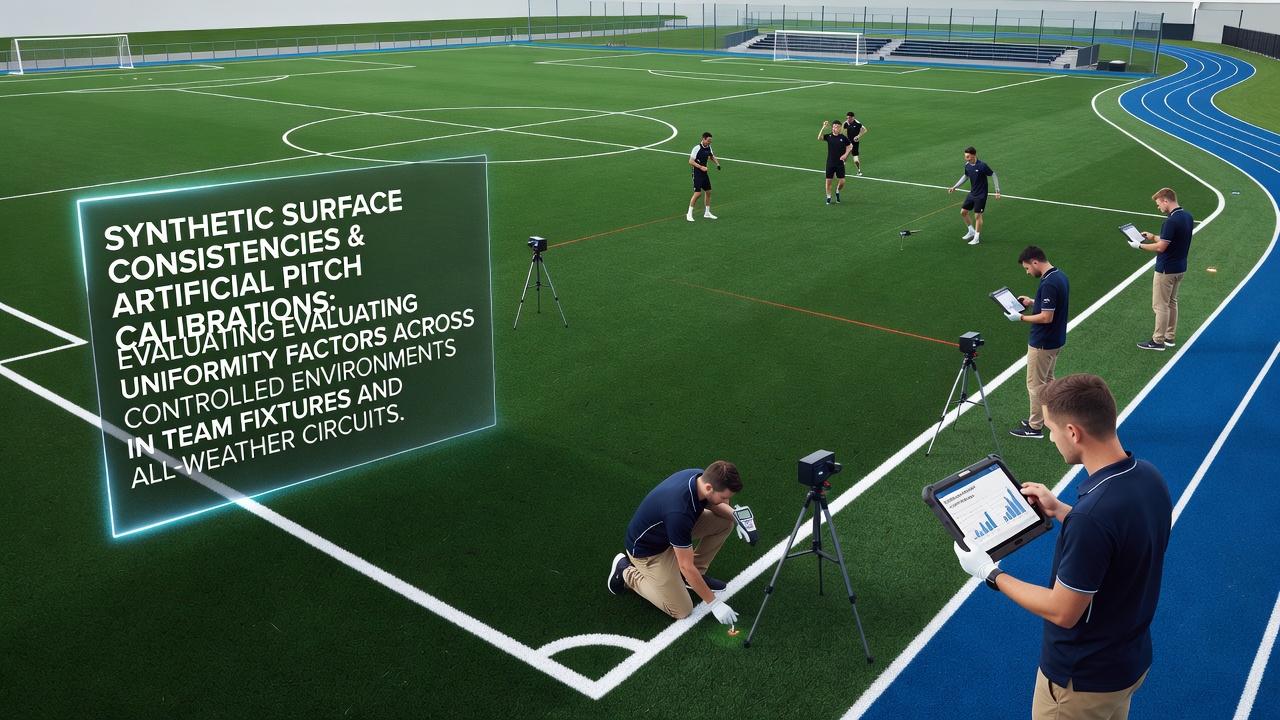 Research into synthetic surfaces has expanded considerably in recent years as facilities worldwide seek consistent performance across varying conditions, and manufacturers now apply precise calibration techniques to maintain uniformity in both indoor team environments and outdoor all-weather circuits. Standards organizations track metrics such as shock absorption, rotational resistance, and surface friction through repeated laboratory and field protocols that measure how materials respond under load. These evaluations rely on controlled temperature ranges, humidity levels, and usage simulations to isolate variables that affect play characteristics. Manufacturers construct artificial pitches from layered polyethylene fibers, infill materials, and backing systems that undergo initial calibration before installation. Technicians adjust fiber density and infill depth to achieve target values for energy return and ball roll, while monitoring equipment records deviations at multiple grid points across the playing area. In team fixtures, clubs schedule regular assessments that compare readings against baseline data collected during the initial setup phase.
Calibration protocols in controlled team environments
Indoor facilities maintain tighter environmental controls than outdoor venues, allowing technicians to regulate airflow and lighting that influence surface temperature and therefore traction properties. Studies conducted by European research institutes show that even minor fluctuations in ambient conditions can alter fiber stiffness, prompting operators to recalibrate infill distribution on a quarterly schedule. Data collected from multi-team training centers indicates that uniform shock absorption readings stay within a five percent tolerance band when maintenance teams follow manufacturer-specified grooming intervals.
Teams that compete on these surfaces record metrics such as player acceleration and ball bounce during matches to verify ongoing consistency, and facility managers cross-reference those observations with instrumented tests performed between fixtures. Researchers at Australian sports laboratories have documented how infill migration occurs under concentrated foot traffic zones, leading to targeted redistribution procedures that restore balance without full surface replacement.
Uniformity factors across all-weather circuits
All-weather racing circuits present different calibration demands because they accommodate higher speeds and repeated directional changes that stress surface layers in distinct patterns. Engineers measure longitudinal and lateral friction coefficients at intervals along straights and bends to detect variations that could affect vehicle or equine performance. Standards developed by bodies such as ASTM International specify test methods that simulate dynamic loads while recording surface deformation under repeated cycles.
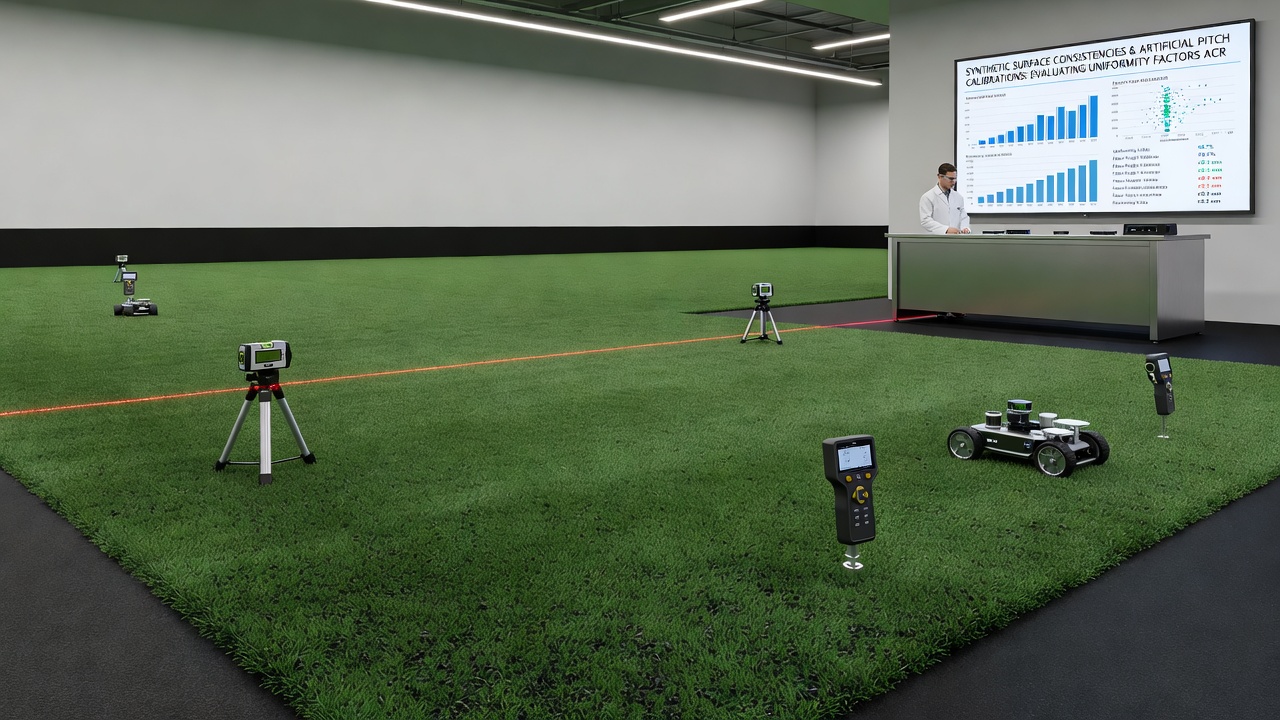
Circuit operators in North America apply laser-guided profiling systems that generate three-dimensional maps of the running surface, highlighting areas where compaction differs from surrounding sections. These maps guide localized treatments that restore evenness before events, and subsequent re-testing confirms that deviations remain below established thresholds. Canadian regulatory guidelines for synthetic track construction emphasize drainage integration to prevent water accumulation that would otherwise create inconsistent grip zones during wet periods.
Evaluation methods and data trends through mid-2026
Assessment routines combine portable devices for on-site checks with fixed laboratory rigs that replicate extended usage periods. Portable force plates capture peak loads during simulated sprints or turns, while automated sweepers redistribute infill according to algorithmic recommendations derived from prior readings. Figures released by the International Association of Athletics Federations reveal that circuits maintaining quarterly calibration cycles exhibit lower variance in surface hardness measurements compared with those serviced less frequently.
Technicians also monitor fiber wear through microscopic imaging that identifies fraying before it affects overall uniformity, and they schedule selective fiber replacement when wear exceeds predetermined percentages. In June 2026 several major facilities implemented updated sensor networks that stream real-time temperature and moisture data directly to calibration software, enabling preemptive adjustments ahead of scheduled events rather than reactive corrections afterward.
Integration of testing across multiple venue types
Operators managing both team pitches and racing circuits increasingly adopt shared testing frameworks that standardize measurement intervals and reporting formats. This approach allows comparative analysis of how similar polymer compounds perform under different loading profiles, and it supports material refinements that benefit both applications. University-led projects in Asia have examined hybrid surface constructions that combine traditional infill with embedded cushioning elements, reporting improved consistency scores across temperature gradients ranging from five to thirty-five degrees Celsius.
Equipment calibration itself receives periodic verification through certified reference pads that simulate known surface properties, ensuring instruments remain accurate across extended field campaigns. Such cross-checks reduce measurement drift and maintain confidence in uniformity data collected over multiple seasons.
Conclusion
Consistent performance on synthetic surfaces depends on systematic calibration routines that address material properties, environmental variables, and usage patterns across both team fixtures and all-weather circuits. Organizations continue to refine testing protocols and sensor integration to keep uniformity within acceptable limits while extending surface lifespan. Ongoing data collection through 2026 and beyond supplies the benchmarks needed for future material and maintenance advancements.