When elevation meets expectation: football travel to high-altitude venues and the resulting shifts in match previews
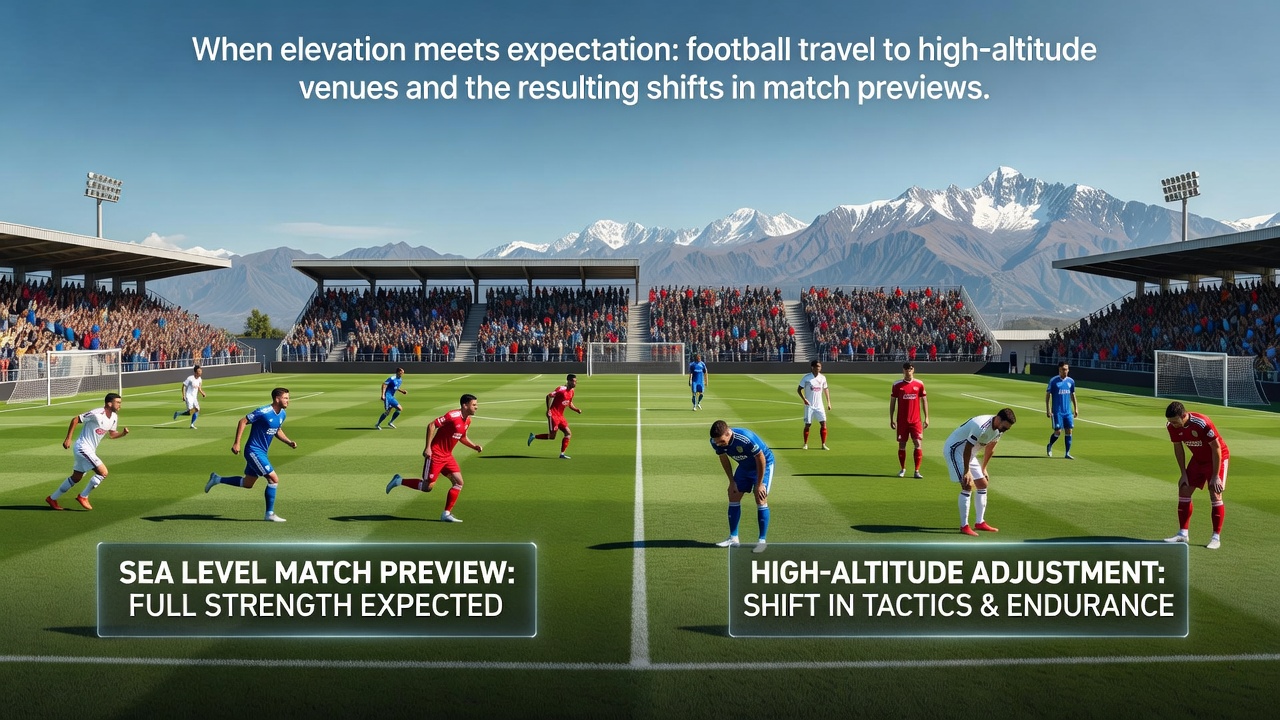
High-altitude venues in football introduce measurable physiological demands that reshape how analysts construct match previews, with reduced oxygen availability directly influencing player output, recovery patterns, and tactical adjustments across multiple competitions. Teams traveling to cities such as La Paz, Mexico City, or Quito encounter elevations exceeding 2,200 meters, where atmospheric pressure drops and oxygen partial pressure declines, prompting shifts in aerobic capacity that data from past fixtures consistently document.
Physiological responses at altitude
Players experience immediate reductions in maximal oxygen uptake when competing above 2,000 meters, and studies tracking heart rate variability alongside blood oxygen saturation levels show that even elite athletes require several days for partial acclimatization. Research published by the Australian Institute of Sport demonstrates that VO2 max can fall by 7 to 10 percent at 2,500 meters, while repeated sprint performance declines further as match duration extends. These changes alter the baseline assumptions that preview models apply to expected goal tallies, possession retention, and pressing intensity.
Coaches therefore adjust training loads in the 72 hours before departure, incorporating hypoxic tents or simulated altitude chambers to accelerate adaptation, and medical staff monitor hemoglobin concentrations to predict individual tolerance thresholds. Data collected from CONMEBOL qualifiers indicates that visiting sides record 12 to 15 percent fewer high-intensity runs in the second half when they arrive less than 48 hours before kickoff.
Documented performance patterns
Historical match logs reveal recurring trends at specific grounds. Bolivia's national team maintains an undefeated record at Estadio Hernando Siles since 2014 in official fixtures, while visiting teams average 0.8 goals per game compared with 1.4 at sea level. Mexican clubs competing at Estadio Azteca show similar home advantages, with win percentages rising 18 points above their season average when opponents travel from lowland regions. Analysts incorporate these venue-specific coefficients into preview algorithms, weighting recent away results at altitude more heavily than neutral-site metrics.
July 2026 preparations for matches scheduled in Mexico City during the FIFA World Cup have already prompted several federations to schedule training camps at intermediate elevations in the United States and Canada, allowing squads to log 10 to 14 days of exposure before competitive windows open.
Adjustments in preview methodologies
Preview frameworks now integrate altitude-adjusted expected goals models that reduce projected scoring rates by 15 to 25 percent for visiting teams, while increasing the predicted frequency of set-piece situations due to fatigue-induced defensive lapses. Analysts cross-reference GPS data from club tracking systems with historical altitude benchmarks to forecast substitution timings adn formation shifts, often highlighting the increased value of midfielders who excel in shorter passing sequences rather than long transitions.
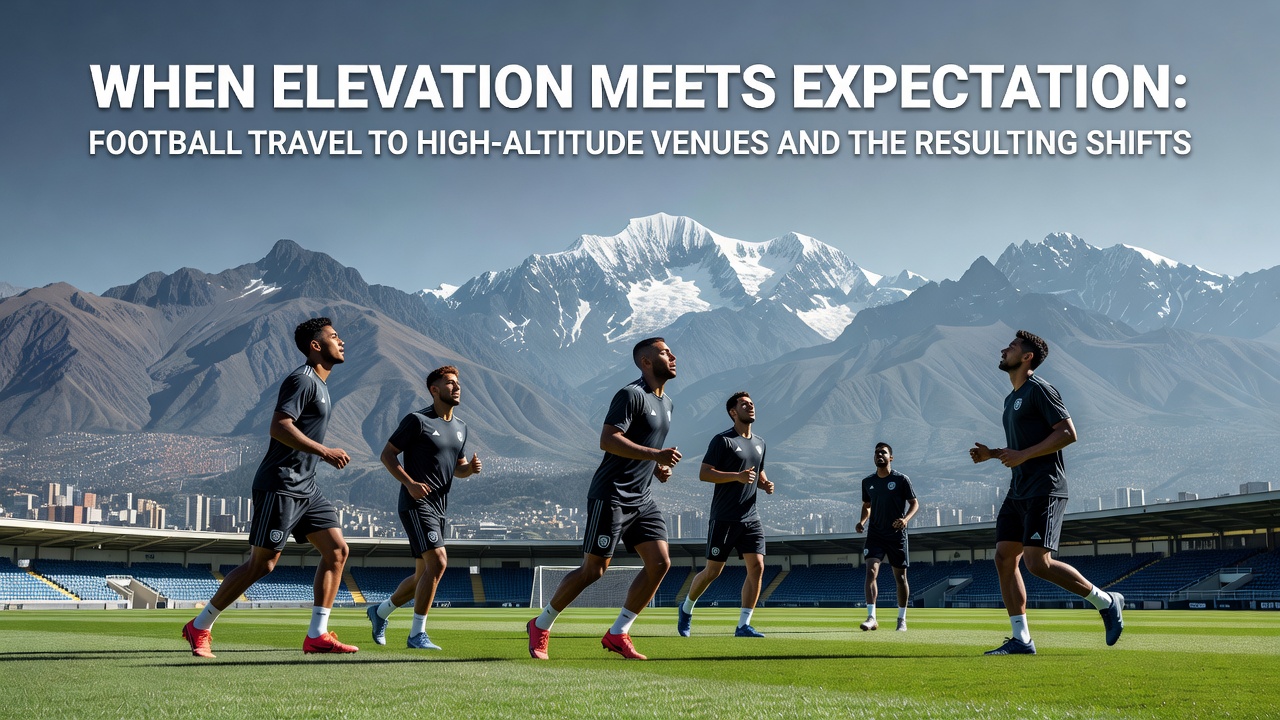
Betting markets and media previews reflect these recalibrations, with over/under totals lowered and draw probabilities elevated in fixtures involving rapid ascents. Platforms that aggregate player tracking information publish revised heat maps showing compressed playing areas and reduced width in the final third when teams operate under hypoxic stress.
Logistical and recovery considerations
Federations enforce strict hydration and nutrition protocols that include iron supplementation and carbohydrate loading schedules calibrated for lower oxygen environments. Travel itineraries prioritize direct flights to minimize cumulative fatigue, and some squads arrive up to five days early to allow natural erythropoietin responses to elevate red blood cell counts. UEFA medical guidelines recommend against full-intensity sessions on the day of arrival, favoring light activation work that preserves glycogen stores for match day.
Opposition scouts now compile separate dossiers for high-altitude fixtures, documenting how specific players respond to repeated exposures and noting any prior incidents of altitude-related illness. These granular datasets feed into machine-learning models that generate probability distributions tailored to venue elevation rather than generic league averages.
Conclusion
High-altitude travel continues to reshape football analytics by forcing measurable recalibrations in performance expectations, tactical planning, and recovery timelines. As governing bodies schedule more fixtures at elevation ahead of 2026, the integration of physiological data into preview processes will expand, producing more precise forecasts that account for both environmental stressors and individual adaptation rates.